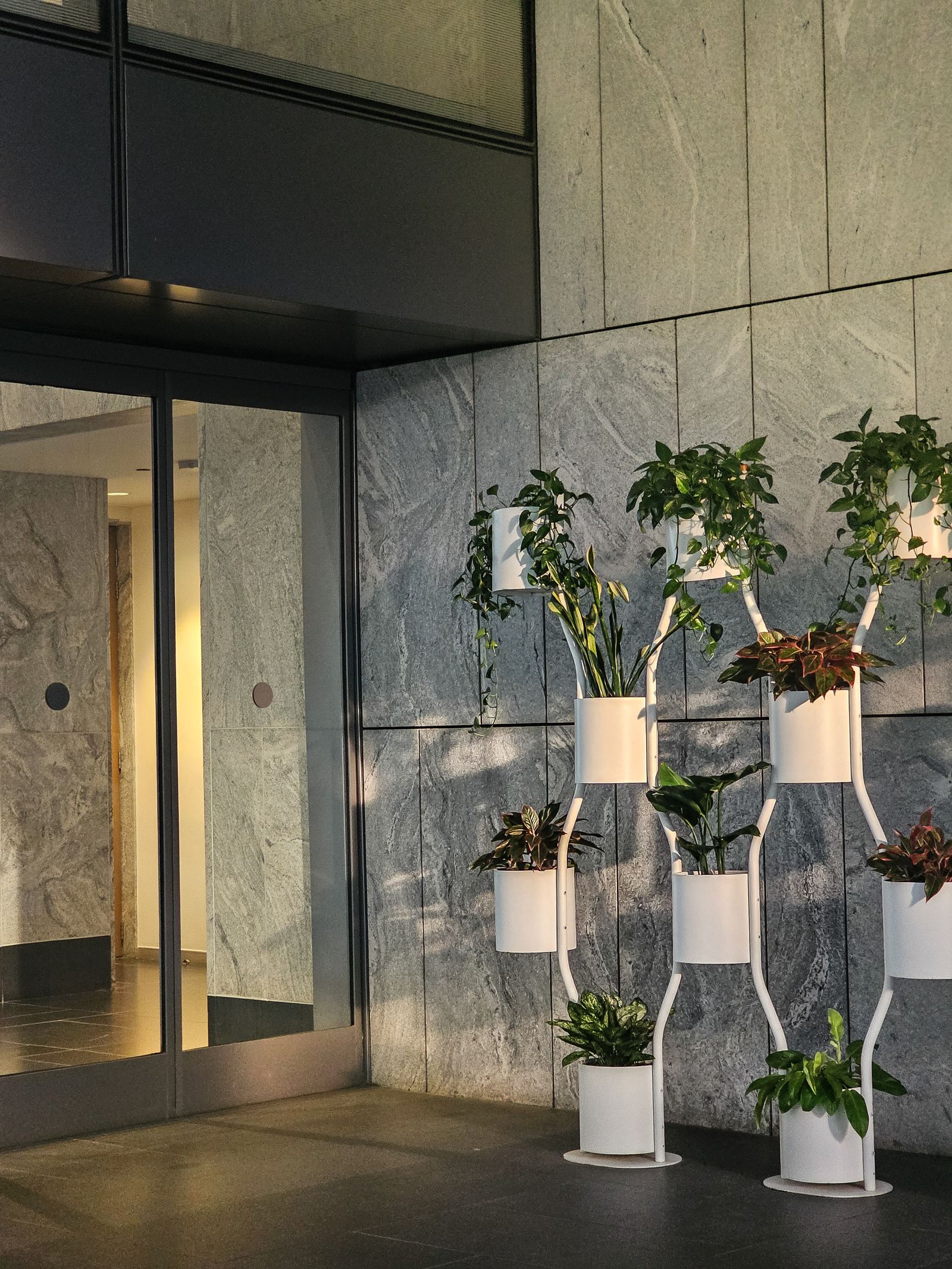
Sri Lanka has rainforests, beaches, highlands, and over 3,000 flowering plant species. Yet most of our offices feel like they were designed for a cold, grey climate: all glass, steel, and lifeless corners. Biophilic design flips that. And it's a movement that fits Sri Lanka perfectly.
At Mosaic Turnkey Interiors, biophilic principles are baked into projects from concept stage, because in our climate, they make sense on every level: aesthetic, environmental, and commercial.
Biophilic design delivers measurable results: 15% increase in productivity, 6–15% improvement in well-being scores, lower absenteeism, better air quality, and improved staff retention. Sri Lanka's year-round growing climate, local timber availability, and abundant daylight make it the ideal country for biophilic offices.
What Is Biophilic Design?
Biophilic design is the practice of connecting indoor spaces with nature through living plants and green walls, natural materials (timber, stone, bamboo), natural light and ventilation, views to outside greenery, water features, and organic shapes and patterns.
It's not "stick a plant in the corner." It's a design philosophy backed by decades of research showing measurable benefits: 15% increase in productivity, 6–15% improvement in well-being scores, lower absenteeism, better air quality, and improved staff retention.
Why Sri Lanka Is Perfect for Biophilic Offices
Most countries have to fight their climate to make biophilic offices work. We have a head start:
- Year-round growing climate: plants thrive without expensive artificial light
- Local timber availability: teak, rubberwood, jack, and mahogany
- Abundant natural daylight: design around windows, not against them
- Operable openings: balconies, terraces, and courtyards are feasible in most buildings
- Local stone and natural materials: accessible and cost-effective
5 Easy Biophilic Upgrades for Any Sri Lankan Office
- Living green wall in reception: instant impact, low maintenance
- Natural timber joinery instead of laminate-clad MDF
- Operable windows or balcony doors to bring in fresh air
- Indoor planters as space dividers: replace drywall with greenery
- A "tropical corner": a planted breakout zone with rattan furniture
Each of these is achievable within most fit-out budgets. Mosaic's design team integrates them seamlessly into corporate layouts.
Common Pitfalls to Avoid
- Over-planting: too many species becomes a maintenance burden
- Wrong plant selection: not every tropical plant survives indoors under AC
- Ignoring irrigation: living walls need proper drainage
- Treating biophilic as decoration: it must be integrated into the layout, not stuck on at the end
The difference between a biophilic office and a "plant in a pot" office is design intent. That's where Mosaic's concept stage earns its keep.
The Bottom Line
Biophilic design in Sri Lanka isn't a trend. It's a return to how our buildings used to feel: open, airy, connected to the outdoors. In an era where talent chooses employers based on workspace quality, biophilic offices aren't a nice-to-have. They're a competitive advantage.