Look up from your laptop for a moment. The way your office looks today will look completely outdated by 2030. Across Colombo, a quiet revolution is underway: new corporate fit-outs are ditching the cubicle-grid, fluorescent-lit, vinyl-floored template that defined Sri Lankan offices for 30 years.
At Mosaic Turnkey Interiors, the team has been watching this shift happen in real time across 100+ projects. Here are the three forces shaping the future of office design in Sri Lanka.
Three forces are reshaping Sri Lankan corporate interiors: biophilic design going mainstream, smart-office technology becoming standard, and sustainability shifting from CSR checkbox to competitive necessity. Businesses planning a fit-out in 2025–2027 should design once for the next decade, not for next quarter.
1. Biophilic Design Goes Mainstream
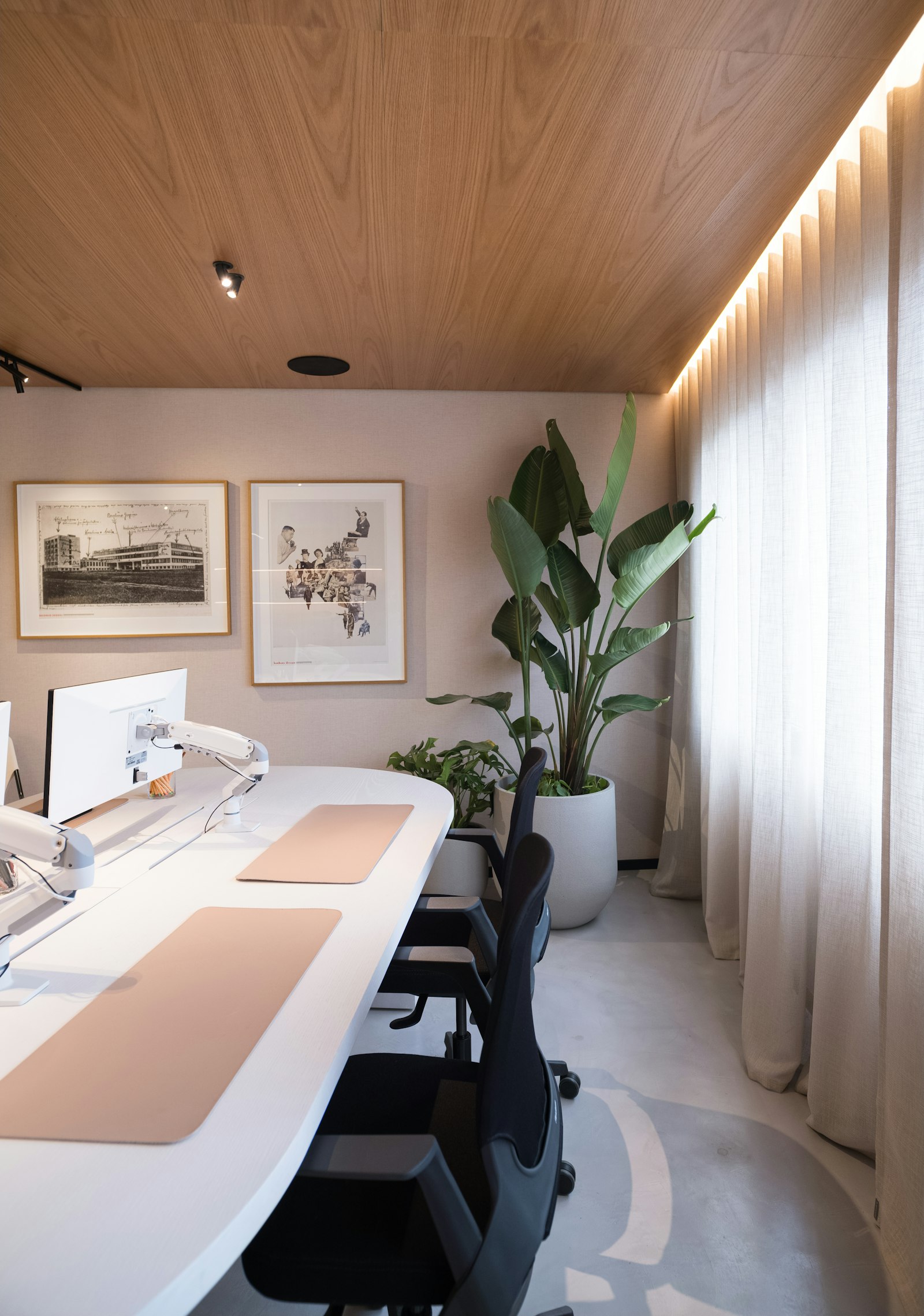
Biophilic design (the practice of bringing nature into built environments) used to be a luxury concept reserved for five-star hotels. Not anymore. In Sri Lanka, biophilic offices are appearing in living green walls in reception areas, indoor planters as natural space dividers, natural timber joinery instead of laminate-clad MDF, daylight harvesting, and operable openings that connect indoor workspaces to balconies and terraces.
In a tropical climate like ours, biophilic design isn't just aesthetic, it's functional. It reduces cooling loads, improves air quality, and measurably lowers stress. Mosaic's bespoke joinery team regularly specifies sustainably sourced local timbers like teak and rubberwood for exactly this reason.
2. Smart Offices, Sri Lankan Style
"Smart office" used to mean a fancy video conferencing setup. In 2025, it means much more: occupancy sensors that dim lights and HVAC when zones are empty, app-controlled access replacing physical key cards, air-quality monitoring critical in dense Colombo towers, integrated room booking synced with Microsoft 365 or Google Workspace, and smart lighting that adjusts colour temperature through the day.
These aren't futuristic. They're installable today, and they're becoming standard in any premium Mosaic fit-out.
3. Sustainability Becomes Non-Negotiable
Sri Lanka's import-driven material economy has a carbon cost. Forward-thinking businesses are now demanding locally manufactured joinery over imported flat-pack, low-VOC paints and adhesives, FSC-certified timbers, modular furniture that can be reconfigured not replaced, and responsible disposal of demolition waste.
Sustainability isn't just a CSR checkbox. It's a cost-saving strategy and a talent magnet. Younger Sri Lankan employees actively choose employers with credible sustainability credentials.
What This Means for Your Office
If you're planning an office fit-out in 2025–2027, the message is clear: design once for the next decade, not for next quarter. That means prioritising flexible floor plates, robust MEP infrastructure that supports future tech, timeless material palettes over trendy finishes, and acoustic performance that supports hybrid work.
Mosaic Turnkey Interiors has built their entire design philosophy around these principles. Their projects don't date, they evolve.